disability card
Disability ID Card: Secure Your Rights & Benefits
Have you ever wondered where to get a reliable disability id card? It’s important for your access to services and daily freedoms.
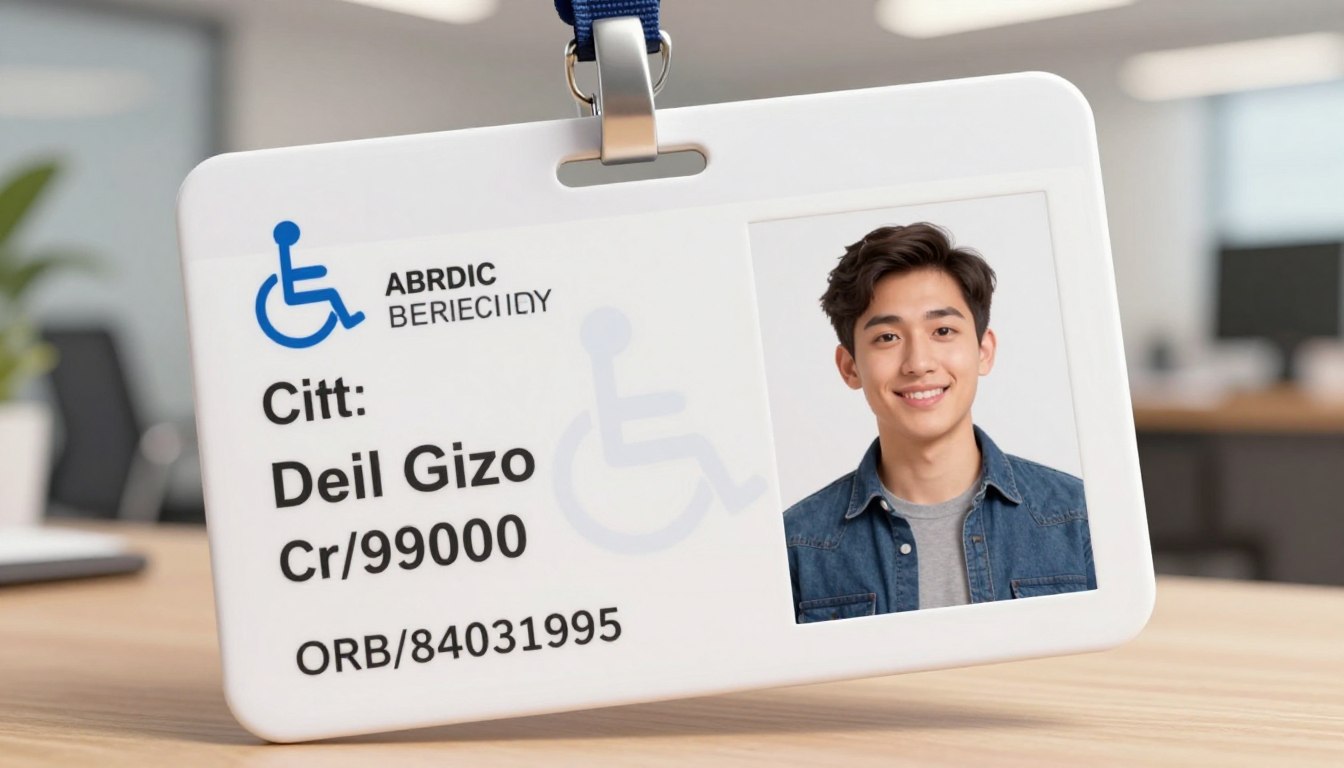
An official disability card is a useful tool. It helps a disabled person ID their needs and access public services. It also helps assert rights in everyday situations across the United States.
This article talks about what you need to know about disability identification. It shows different cards, like the Veterans Affairs VHIC. It explains why each card has its own purpose.
Private or nonprofit disability cards can help with non-visible conditions. They are made from durable materials, even biodegradable ones. But, they can’t replace formal government-issued proof for benefits or parking permits.
For a simple and professional way to get a reliable disability id card, many choose disability-card.com. It’s the best place for disability id card services and supportive identification tools.
What is a Disability ID Card?
A disability ID card shows a person needs special help. It’s like an ID but keeps health info private. It proves who you are and your medical needs.
Definition and Purpose
Government cards show you’re in programs and speed up doctor visits. The Veteran Health Identification Card (VHIC) is an example. It has special features like the VA emblem and braille.
It helps with VA appointments and gives discounts. But, it’s not for buying things or getting care outside the VA.
Nonprofit and private cards help with everyday needs. They ask for a seat or quiet space without explaining. They make life easier and reduce stigma.
Eligibility Requirements
Rules for getting a card vary. Federal or state cards need ID like a driver’s license. Some need medical records for benefits.
Nonprofit cards might be easier to get. They don’t always need medical proof. This helps those without official papers.
People living abroad might need more checks. For example, VA applicants outside the U.S. use ID.me for identity checks.
Types of Disability ID Cards
Government cards prove you’re in certain programs. Examples are the VHIC and other federal or state cards.
State cards cover things like parking for the disabled. Rules and who issues them vary by state.
Nonprofit cards explain invisible disabilities. They ask for help without giving legal rights. Some are made from eco-friendly materials.
Emergency cards give first responders important health info. They help when you can’t talk.
Benefits of Having a Disability ID Card
A disability ID card makes daily tasks easier. It also speeds up access to services. It covers what a disabled person ID does and what it supports.
Access to Government Services
IDs from the government make visits to agencies easier. For veterans, the Veterans Health Identification Card is key. It lets users check in at VA medical centers and access VA health records.
Requesting cards online uses systems like ID.me or Login.gov. In-person requests need a current photo and government ID. The card proves identity but doesn’t replace eligibility checks for Social Security Disability or Medicaid.
Transportation and Parking Privileges
State parking permits and placards offer legal parking spots after medical approval. A disability ID card helps show needs when using parking permits. It doesn’t always replace official placards.
Transit agencies may accept disability documents for reduced fares or paratransit. They often need formal medical verification for long-term service.
Financial Discounts and Assistance
Retailers, museums, and service providers offer discounts with valid disability proof. For veterans, the VHIC helps get discounts without extra photo ID. Private businesses may accept different disabled person ID cards.
Major financial benefits like SSI, SSDI, or Medicaid need formal disability certification and a full application. Clear disability documentation speeds up in-person verification.
Employment Protection and Rights
A visible disability ID card makes asking for workplace accommodations easier. The Americans with Disabilities Act protects documented disability and an interactive process. Employers may ask for medical documentation or a formal request.
Using an ID card reduces the need to explain things over and over. It supports respectful talks with supervisors and HR.
A disability ID card offers many benefits in daily life. It helps access services and lowers the need for repeated advocacy. Legal eligibility and formal determinations are left to the right agencies.
How to Apply for a Disability ID Card
To get a disability id card, first find out who can give it to you. Look at government, state, and nonprofit programs. Each has its own rules. Read what they say, collect your documents, and pick how you want to apply.
Application Process Overview
VA applicants need to get health care first. Then, they can ask for a VHIC. You can do this in person or online with ID.me, Login.gov, or a DoD CAC/PIV.
Don’t send in more than one request at a time. This can slow things down. It takes 7, 14 days for domestic mail. International mail can take up to 30 business days.
If you applied in person and it’s been 10 days, call the VA. For online, wait 10 days and then contact the VA if you haven’t heard back.
Required Documentation
Most cards need a current photo ID like a driver’s license or passport. If your ID doesn’t have an address, bring a utility bill or voter card. For online, you need a recent photo that meets certain rules.
State programs might ask for a doctor’s form or medical records. Private and nonprofit groups might just need a photo and your contact info. But, they might not all accept this.
Tips for a Successful Application
Check your ID documents before you start. Make sure they are current. Follow the photo rules closely to avoid problems.
Keep your application receipts and numbers. Watch the time frames given for processing. For state benefits, download the forms and doctor’s requirements from the agency’s website.
If you don’t have the right documents, get a doctor’s evaluation. Consider private cards for special needs identification.
Common Challenges and Solutions
Verifying your identity can be hard. Set up ID.me or similar accounts before applying from abroad. If you don’t have the right address proof, bring something else.
If your card is late or lost, use the issuer’s replacement options. Be ready to prove who you are. Private cards are not for formal disability proof needed for parking or ADA rights.
Know what each issuer accepts. Keep all your interactions documented. This helps solve problems fast.
FAQ
What is a disability ID card and how does it differ from disability documentation or certification?
Who is eligible for government-issued disability cards like the VA Veteran Health Identification Card (VHIC)?
What types of disability ID cards exist and what do they do?
Can a private or nonprofit disability card replace a government-issued ID or certification?
How do I apply for a VA VHIC and what are the processing times?
What documentation is required when applying for government-issued disability cards?
What should I expect when applying for state-issued disability parking permits?
Do disability ID cards provide automatic access to financial assistance or discounts?
How can a disability ID card help at work, and does it replace ADA documentation?
What are common application pitfalls and how do I avoid them?
How do replacements and lost-card procedures work for government-issued IDs like the VHIC?
Are private disability ID cards environmentally friendly or produced with quality materials?
Do disability ID cards issued outside the U.S. follow the same rules as U.S. government cards?
If I don’t have a formal medical diagnosis, can I get a disability ID card?
Where can I find more information or start an application for specific cards like the VHIC or state permits?
Keep reading
More from the studio

Emotional Growth: A Guide to Personal Development

מדריך מלא להקמת סוכת אבלים בישראל